
InexHub
InexHub is a digital platform connecting banks, businesses and warehouses to jointly manage, control and prove the status of goods pledged as collateral. Every inbound and outbound order is approved and recorded on the platform; collateral value is tracked in real time against the required level; inventory is reconciled every day and every action leaves a tamper-proof record.
Tracking the full collateral lifecycle
From the moment goods enter the warehouse until release, every status is backed by evidence.
Receiving & verification
Counting, weighing and video recording as goods are received.
Digital certificate
Records the verified lot as the basis for the credit file.
Continuous monitoring
AI cameras, IoT and periodic stocktakes keep the status up to date.
Controlled release
Goods are released only under conditions the bank has approved.
Pledge release
The file is closed with its full history on record.
Key features
Tripartite monitoring plans
Each plan links one bank branch, one business and one warehouse location under a tripartite agreement. A lot belongs to only one plan at a time, which rules out double pledging by design.
Controlled inbound and outbound orders
Every order and receipt is requested, approved and recorded on the platform, either order by order or against a minimum collateral level chosen by the bank. The warehouse releases goods only on a valid order.
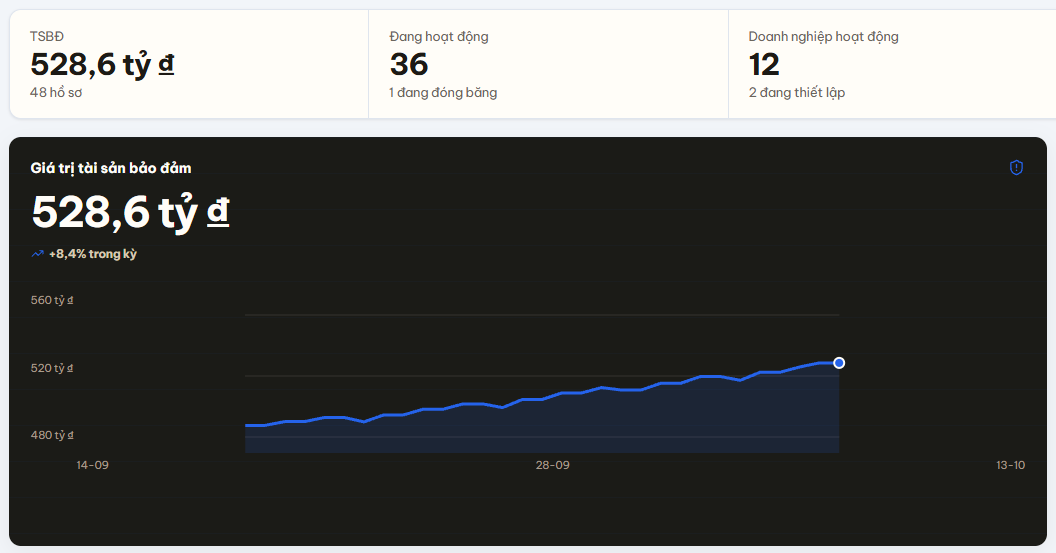
Real-time collateral value
Banks track collateral value by customer, warehouse and lot against the required level; the platform automatically freezes outbound shipments when value falls below it.
Reconciliation & alerts
The warehouse submits stock figures from its warehouse system at the end of every working day for reconciliation. Discrepancies, overdue reconciliations and limit breaches trigger instant SMS and email alerts.
Role-based access & immutable records
Each party sees and acts only on its own part of the work. Every action is written to the audit trail and cannot be edited or deleted once recorded.
Reports, documents & pledge release
Periodic reports, stored inbound and outbound documents, evidence files in case of disputes; management of pledge release and collateral enforcement on the bank's instruction.
Integration with each party's systems
The first version takes data from warehouse, weighbridge and bank systems through input screens or standard file templates, so it deploys fast without changing existing systems. Automated API integration will follow in the next upgrade.
Value by role
- See the collateral every day
- Lower risk of unauthorised release and double pledging
- Independent evidence for appraisal
- Use inventory as collateral
- Clear inbound and outbound, shorter waits
- Transparent data that builds credit standing
- Become a warehouse certified for collateral management
- Added value for warehouse tenants
- Attract customers who need financing
Try InexHub at your warehouse
A Pilot lets all parties evaluate with real data before full rollout.